
What Is Flash in Forging?
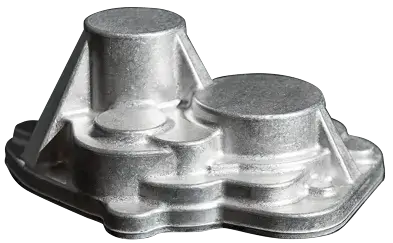
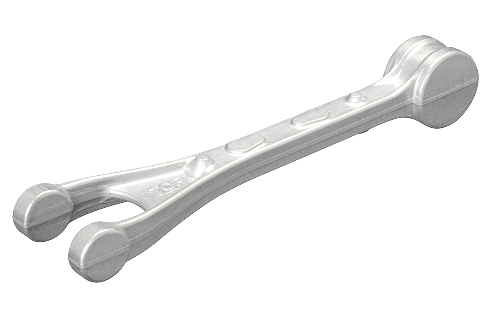
Flash is the thin layer of excess metal that forms around the edges of a part when material is squeezed out between forging dies during the forging process. It appears where the dies meet and is later trimmed off during finishing operations as the part moves through downstream manufacturing stages. Flash is a normal and expected byproduct of forging, especially in open die or less controlled processes.
Although flash helps ensure full die fill, it also represents excess material usage and additional trimming steps. Minimizing flash improves efficiency, reduces waste, and supports tighter tolerances across the end-to-end manufacturing lifecycle.
Closed die aluminum forging reduces the amount of flash significantly by controlling material flow and forming the part inside a tightly engineered cavity. This is one of the advantages that allows Anchor Harvey to create precise shapes with minimal secondary processing and improved downstream production efficiency.
How Flash Forms
- Metal is heated and placed between upper and lower dies
- Dies close under high pressure
- Excess material flows outward into gaps at the die parting line
- The squeezed material forms a thin layer called flash
- Flash is removed during trimming or machining
Key Elements of Flash
- Forms at the die parting line
- Indicates full or near full cavity fill
- Requires trimming or finishing after forging
- Amount depends on die design and forging pressure
- Reduced in closed die processes with tight cavity control
- Excessive flash increases waste and material cost
Flash Within the End-to-End Manufacturing Lifecycle
Flash is generated during forging but directly affects downstream operations such as trimming, machining, and finishing. The amount of flash produced influences material utilization, processing time, and overall production efficiency.
In an end-to-end manufacturing model, controlling flash is critical to reducing waste and streamlining subsequent steps. At Anchor Harvey, advanced die design, simulation, and precision closed die forging techniques are used to minimize excess material, ensuring that components require less post-processing while maintaining dimensional accuracy.
This approach supports near net shape production and improves efficiency across the full manufacturing lifecycle.
Why Flash Matters
- Reducing flash decreases material waste
- Minimizing flash lowers trimming and machining time
- Better flash control improves dimensional accuracy
- Less flash supports near net shape forging
- Optimized die design leads to more efficient production
No Matter the Industry,
We Flex to Solve What You Need
No Matter
the Industry,
We Are Part of
Everything You do.