
What Is an Aluminum CNC Mill?
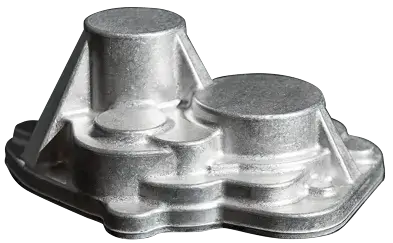
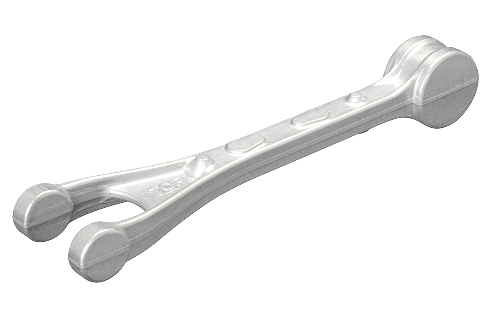
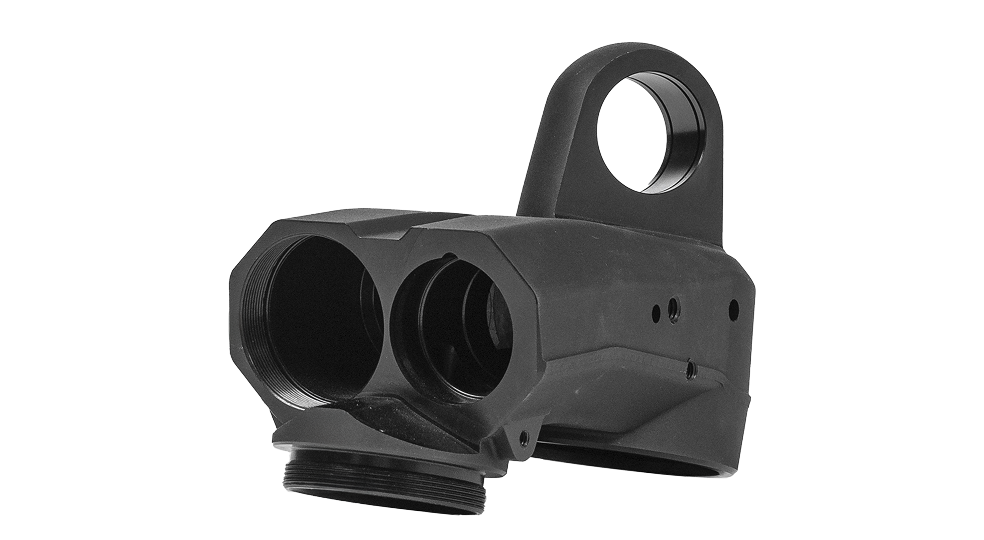
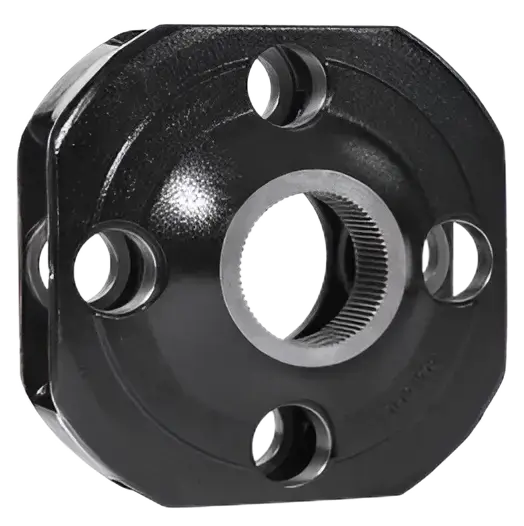
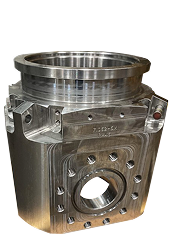
An aluminum CNC mill is a computer numerical control milling machine specifically configured to machine aluminum and aluminum alloys with high accuracy and repeatability. The machine removes material from aluminum stock using rotating cutting tools to produce parts with precise geometries, controlled surface finishes, and consistent dimensional quality.
While CNC mills can machine many materials, aluminum CNC milling requires optimized spindle speeds, cutting tools, and chip evacuation strategies to maintain surface integrity and dimensional stability. This makes aluminum CNC mills essential in industries that demand lightweight, high-precision components.
An aluminum CNC mill is a high-capability piece of equipment, but equipment capability alone does not determine production outcomes. What the machine receives, the quality and consistency of incoming material, the accuracy of upstream forming, and the clarity of tolerance requirements, determines how much of that capability translates into finished part performance.
How an Aluminum CNC Mill Works
An aluminum CNC milling process follows a controlled digital workflow:
- A CAD model defines the part geometry and tolerance requirements.
- CAM software generates milling tool paths optimized for aluminum cutting.
- The CNC mill controls spindle speed, feed rate, and tool movement.
- Cutting tools remove aluminum material to form the final shape.
- Finished parts are inspected to verify dimensional accuracy and surface quality.
This digital control allows aluminum parts to be produced consistently across production runs.
Key Elements of an Aluminum CNC Mill
- CNC milling machine with high-speed spindle capability
- Cutting tools designed for aluminum machining
- Tool holders and tool change systems
- Rigid workholding and fixturing
- Coolant or lubrication systems for chip control
- Precision inspection and measurement equipment
Where the Aluminum CNC Mill Fits in the Manufacturing Lifecycle
A well-configured aluminum CNC mill is a precision instrument. Like any precision instrument, it performs best when the conditions around it are controlled. In an end-to-end manufacturing model, that means the mill is set up not just for the operation at hand, but with full awareness of what came before and what comes after.
Fixturing decisions are a good example. How a part is held during milling directly affects the datum references used to establish tolerance relationships across features. If those references are not coordinated with the forming stage that produced the incoming blank, the milled part may be geometrically correct on its own terms while still being incompatible with the mating components it needs to fit. This kind of misalignment is not a machining error, it’s a lifecycle planning failure.
Tool path strategy is another area where lifecycle context matters. Aggressive material removal may be efficient in isolation but can introduce residual stress or surface conditions that affect how a part responds to subsequent heat treatment or coating. In a lifecycle-owned manufacturing environment, milling parameters are developed with downstream processing stages in mind, not optimized independently of them.
Scalability is also worth considering. A milling process developed in isolation during prototyping often requires significant rework before it can be replicated reliably at production volume. When the aluminum CNC mill is part of a coordinated lifecycle from the start, the process parameters, fixturing, and inspection criteria established during development are production-ready by design.
Industry Applications
Aerospace
Aluminum CNC mills produce structural brackets, housings, and support components that require lightweight strength, tight tolerances, and consistent quality for aerospace compliance.
Specialty Automotive
Specialty automotive manufacturers use aluminum CNC mills to create performance-oriented components with precise fit and reduced weight.
Motorsports
Motorsports applications rely on aluminum CNC milling to produce lightweight, high-accuracy parts that support speed, reliability, and performance optimization.
Heavy Equipment, Construction, and Agriculture
Aluminum CNC milling supports durable, corrosion-resistant components used in demanding operating environments.
Fluid Power
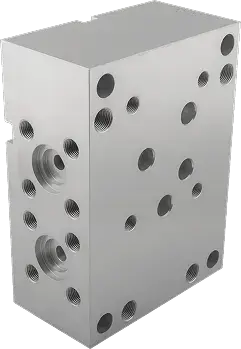
Fluid power systems depend on aluminum CNC milling for valve bodies, manifolds, and housings that require precise tolerances for pressure control.
Energy
Energy sector applications use aluminum CNC milling to produce components that must maintain dimensional accuracy and structural integrity under operational stress.
Why Aluminum CNC Milling Matters
- Enables high accuracy and repeatable machining of aluminum
- Supports complex geometries and tight tolerances
- Provides excellent surface finish quality
- Allows efficient and scalable production
- Delivers its full performance potential when milling operations are planned and executed as part of a coordinated manufacturing lifecycle
No Matter the Industry,
We Flex to Solve What You Need
No Matter
the Industry,
We Are Part of
Everything You do.