
What Is a Billet?
A billet is a solid, semi finished bar of metal used as the starting material in forging. Aluminum billets are typically produced through casting or extrusion and then cut to length before entering the forging process. They provide a uniform, consistent block of material that can be shaped by heat and pressure into a finished part and serve as the first step in the end-to-end manufacturing lifecycle.
Billets are not final components. Instead, they serve as the raw material that will be transformed into precision forged shapes with superior mechanical properties. Their size, alloy composition, and manufacturing quality influence how effectively they respond to deformation during forging and how well they perform in downstream processing stages.
In aluminum forging, billets provide the foundation for creating strong, lightweight, and reliable parts used across aerospace, automotive, and defense applications by establishing the baseline material properties for the entire production process.
How Billets Are Used in Forging
- Billet is cut to the required weight or size for the intended part
- Material is heated to the proper forging temperature
- The billet is placed into a die or forging press
- Pressure shapes the billet into the desired geometry
- The forged component undergoes additional finishing, heat treatment, and inspection as it progresses through the manufacturing lifecycle
Key Elements of a Forging Billet
- Alloy composition and certification
- Dimensional consistency and surface quality
- Controlled grain structure from casting or extrusion
- Pre forging heating requirements
- Weight and volume matched to part geometry
- Clean, defect free material integrity
Billets vs. Forged Parts
- Billets are raw material stock with no functional geometry
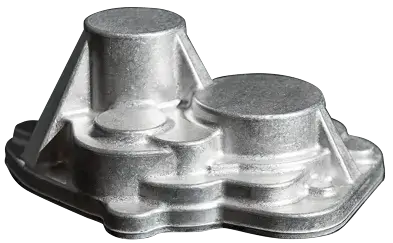
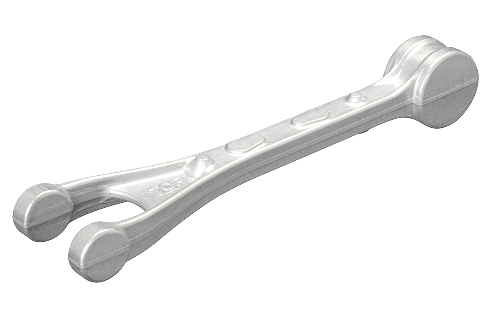
- Forged parts are shaped, compressed, and formed components with engineered strength
- Forging realigns the grain structure of the billet for higher performance
- Billets have uniform but unoptimized mechanical properties
- Forged parts gain improved strength, fatigue resistance, and dimensional accuracy through subsequent processing stages
Billets in End-to-End Manufacturing
Billets represent the starting point of the manufacturing lifecycle, and their quality directly impacts every downstream process. Material composition, cleanliness, and structural integrity influence how the billet flows during forging, responds to heat treatment, and performs in final applications.
In an end-to-end manufacturing model, early material decisions carry through to final component performance. At Anchor Harvey, billets are carefully selected and verified to match alloy specifications, cleanliness requirements, and performance expectations before entering production, ensuring a strong foundation for all subsequent operations.
This alignment helps ensure consistent results across forging, heat treatment, machining, and final inspection.
Why Billets Matter
- Provide consistent starting material for forging
- Allow precise control of alloy and material properties
- Support uniform material flow during forging
- Enable production of strong, durable, lightweight components
- Form the basis for high performance aerospace and automotive parts
No Matter the Industry,
We Flex to Solve What You Need
No Matter
the Industry,
We Are Part of
Everything You do.