
What Is CNC Milling and Turning?
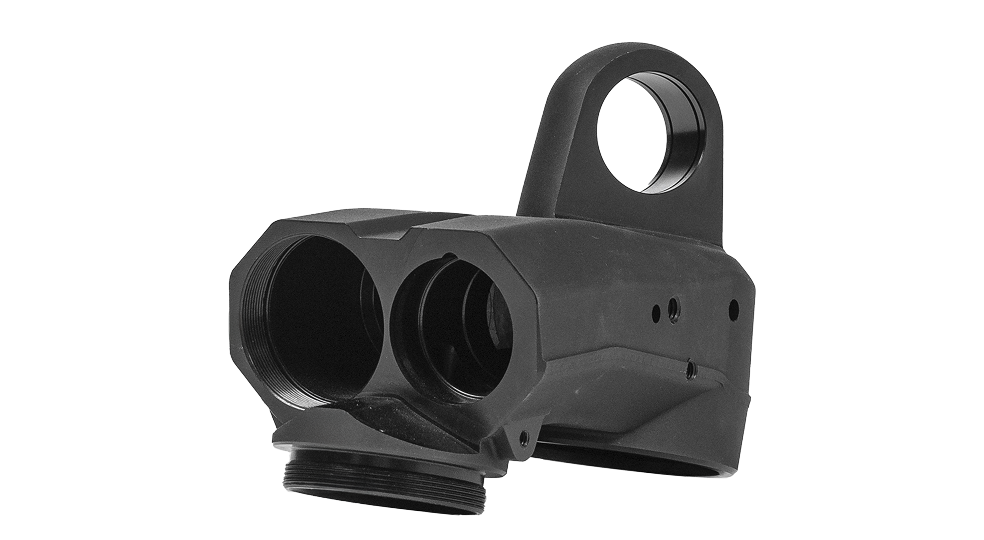
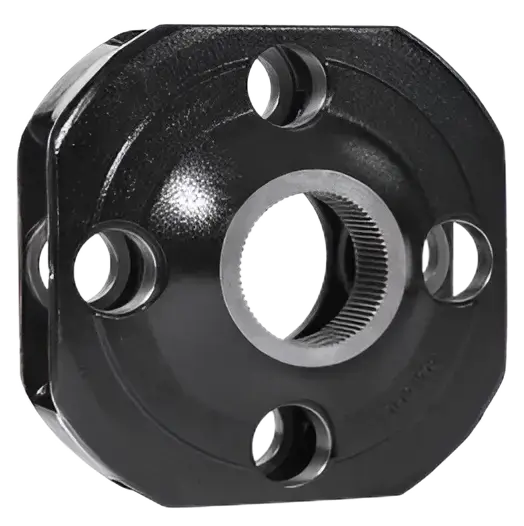
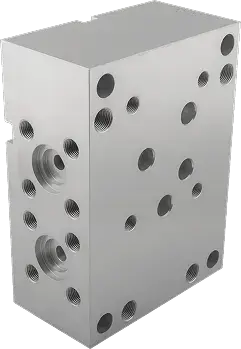
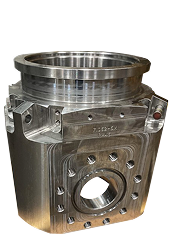
CNC milling and turning are two primary computer numerical control machining processes used to manufacture precision components by removing material from a workpiece. Milling uses rotating cutting tools to shape stationary material, while turning rotates the workpiece against a fixed cutting tool to create cylindrical or symmetrical features.
Together, CNC milling and turning allow manufacturers to produce a wide range of part geometries with high dimensional accuracy, repeatability, and surface quality. These processes are often combined within a single production workflow to achieve complex, multi-feature components.
In precision manufacturing environments, CNC milling and turning provide the flexibility and control required to meet demanding engineering and performance requirements.
How CNC Milling and Turning Work
Both processes follow a digital machining workflow:
- CAD models define part geometry and tolerances.
- CAM software generates milling and turning tool paths.
- CNC milling machines perform cutting operations on stationary workpieces.
- CNC lathes or turning centers rotate the workpiece while tools remove material.
- Parts are inspected to confirm dimensional accuracy and surface quality.
By combining both processes, manufacturers can efficiently produce complex components with tight tolerances.
Key Elements of CNC Milling and Turning
- CNC milling machines and machining centers
- CNC lathes or turning centers
- Cutting tools designed for milling and turning operations
- Tool holders and automatic tool changers
- Workholding systems for stability and alignment
- Precision inspection and measurement equipment
Sequencing CNC Milling and Turning Within the Manufacturing Lifecycle
The decision to mill, turn, or combine both is not purely a geometry question. It is a sequencing question, and sequencing has consequences that extend in both directions along the manufacturing lifecycle.
The order in which milling and turning operations are performed affects part stability, datum integrity, and the residual stress state of the component at each intermediate stage. Removing material changes how a part holds its shape.
A turning operation that removes significant material from a cylindrical feature can relieve internal stress and cause a part to move dimensionally, affecting the accuracy of milling operations that follow. Planning the operation sequence without accounting for these effects produces parts that look correct after each individual step but accumulate variation across the full process.
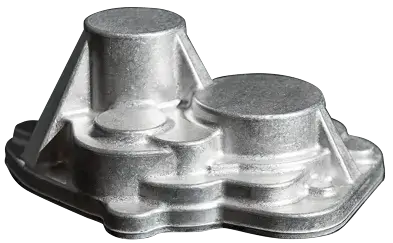
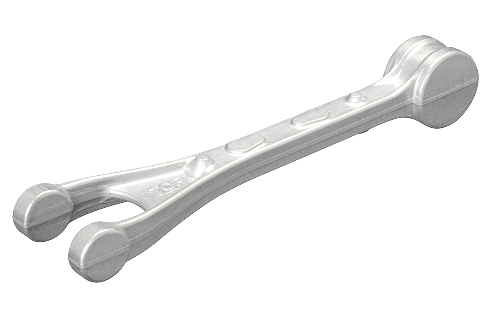
Upstream forming decisions also influence how milling and turning are sequenced and set up. A forged blank, a casting, and a billet each arrive at the machining stage with different internal stress profiles, surface conditions, and geometric consistency.
The optimal milling and turning strategy for one is not necessarily optimal for another. In a lifecycle-owned manufacturing model, the machining sequence is developed with full knowledge of what the incoming material looks like and how it will behave, rather than being designed around an idealized drawing.
The same logic applies downstream. Surface conditions produced by turning operations affect how subsequent coatings adhere and how sealing interfaces perform. Feature locations established during milling determine how a part assembles with its mating components.
When milling and turning are planned as part of a complete lifecycle rather than as standalone operations, these interdependencies are identified and managed before they become production problems.
Industry Applications
Aerospace
CNC milling and turning produce aluminum components used in structural assemblies, housings, and mechanical systems where tight tolerances and repeatability are required for certification compliance.
Specialty Automotive
Specialty automotive manufacturers rely on CNC milling and turning for precision components used in suspension, drivetrain, and performance systems.
Motorsports
Motorsports applications depend on CNC milling and turning to achieve lightweight, high-accuracy parts that support performance and reliability.
Heavy Equipment, Construction, and Agriculture
CNC milling and turning provide durable, dimensionally consistent components for machinery operating in demanding environments.
Fluid Power
Fluid power systems rely on CNC milling and turning to produce valve bodies, shafts, and connectors requiring tight tolerances for pressure control.
Energy
Energy sector applications use CNC milling and turning for components that must maintain accuracy and structural integrity under mechanical and environmental stress.
Why CNC Milling and Turning Matter
- Enable production of complex and precise geometries
- Support tight tolerances and repeatable accuracy
- Improve part fit, function, and reliability
- Allow efficient manufacturing across volume ranges
- Produce the most consistent results when operation sequencing is planned with full awareness of upstream forming conditions and downstream assembly and finishing requirements
No Matter the Industry,
We Flex to Solve What You Need
No Matter
the Industry,
We Are Part of
Everything You do.