
What Is Complex Part Machining?
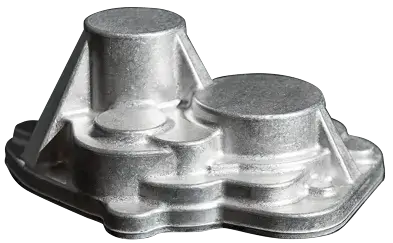
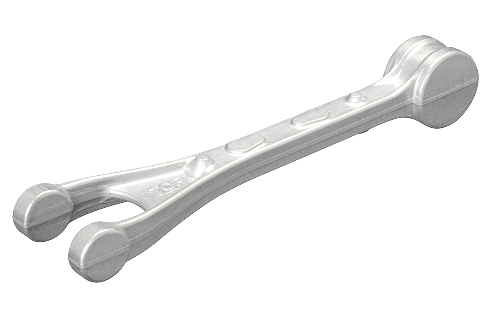
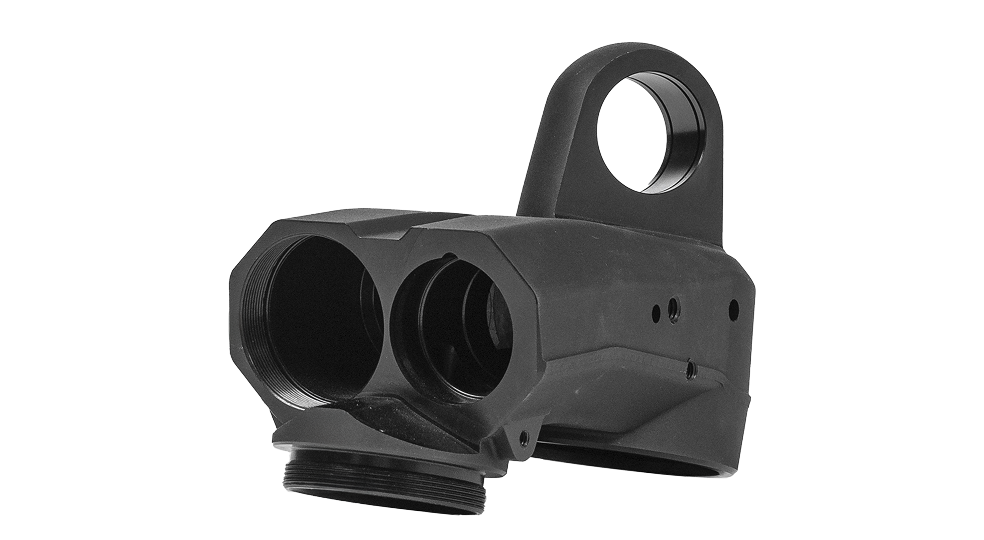
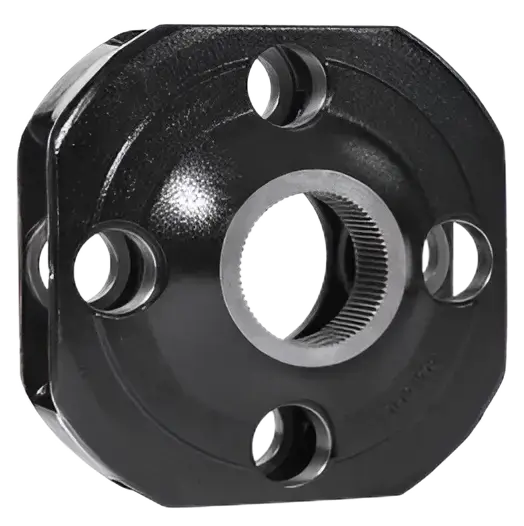
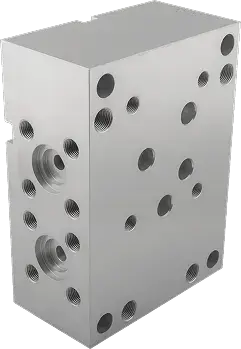
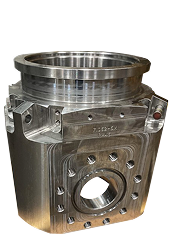
Complex part machining refers to the CNC machining of components that contain intricate geometries, compound angles, deep cavities, thin walls, or multiple functional features that must be produced with high dimensional accuracy and repeatability. These parts often require advanced machining strategies, specialized tooling, and multi-axis equipment.
Complex part machining is commonly used when standard machining methods cannot efficiently or accurately produce the required geometry. The process supports both structural and functional components that must meet strict performance, assembly, and reliability requirements.
In precision manufacturing environments, complex part machining ensures that highly detailed components can be produced consistently and to specification.
How Complex Part Machining Works
Complex part machining follows a highly controlled workflow:
- CAD models define detailed geometry, tolerances, and surface requirements.
- CAM software generates multi-axis and multi-operation tool paths.
- CNC machines perform coordinated cutting across multiple surfaces and features.
- Advanced fixturing minimizes repositioning and distortion.
- Parts are inspected to verify dimensional accuracy and feature integrity.
This process allows complex components to be produced efficiently while maintaining precision.
Key Elements of Complex Part Machining
- Multi-axis CNC machining centers
- Advanced CAM programming and simulation
- Specialized cutting tools for complex features
- Rigid workholding and custom fixturing
- Controlled machining parameters
- Precision inspection and measurement systems
Why Complex Parts Demand Lifecycle Thinking
Complexity in a machined component is not just a technical challenge for the machine shop. It is a signal that more things can go wrong across the lifecycle, and that the consequences of misalignment between stages are harder to detect and more expensive to correct.
Thin walls are a straightforward example. A thin-walled feature that machines correctly in a prototype environment may behave differently at production volume if the incoming blank geometry varies between runs. Wall thickness depends on both where the material starts and where the cutter goes. If the forming stage introduces variation in the starting geometry, the machining stage has less room to absorb it without producing out-of-tolerance walls or, in worse cases, scrapping the part entirely. This is not a machining problem in isolation. It’s a lifecycle alignment problem.
Internal passages and deep cavities present a similar dynamic. The ability to hold tolerances inside a deep bore or a complex internal passage depends on tool access, chip evacuation, thermal stability, and fixturing rigidity. All of these factors are influenced by design decisions made well before the part reaches the machine. A passage diameter that is marginally achievable with the right tooling becomes significantly harder to hold if the surrounding geometry was not designed with machining access in mind. Early engineering collaboration, where manufacturing constraints are introduced at the design stage rather than discovered during first article inspection, is what separates a complex part that machines reliably from one that requires constant process intervention.
Inspection of complex parts also requires more planning than a standard component. Features that are difficult to machine are often equally difficult to measure. Coordinate measuring equipment, custom gauging, and defined measurement sequences need to be considered as part of the production plan, not assembled after the fact. In a lifecycle-owned manufacturing model, inspection strategy is developed alongside the machining strategy, so that every critical feature has a defined verification method before the first part is cut.
Industry Applications
Aerospace
Complex part machining supports aerospace components with intricate geometry, tight tolerances, and strict certification requirements for structural and mechanical systems.
Specialty Automotive
Specialty automotive manufacturers rely on complex part machining for precision components used in suspension, drivetrain, and performance assemblies.
Motorsports
Motorsports applications depend on complex part machining to achieve lightweight, high-accuracy components with advanced geometric designs.
Heavy Equipment, Construction, and Agriculture
Complex part machining produces durable, precisely aligned components for heavy-duty machinery and agricultural equipment.
Fluid Power
Fluid power systems use complex part machining for valve bodies, manifolds, and housings with internal passages and tight tolerance features.
Energy
Energy sector applications require complex part machining for components that must maintain accuracy, integrity, and reliability under demanding operating conditions.
Why Complex Part Machining Matters
- Enables production of intricate and multi-feature geometries
- Supports tight tolerances and high dimensional accuracy
- Improves part fit, function, and assembly performance
- Reduces variation in complex components
- Requires lifecycle-level planning (from design and forming through inspection) to produce reliably and at scale
No Matter the Industry,
We Flex to Solve What You Need
No Matter
the Industry,
We Are Part of
Everything You do.