
What Are Flexible Machining Systems?
Flexible machining systems are manufacturing configurations designed to produce a wide range of parts with minimal changeover time and high operational adaptability. These systems combine CNC machines, automation, tooling strategies, and software controls to support varying part geometries, batch sizes, and production schedules.
Unlike dedicated machining lines built for a single part, flexible machining systems allow manufacturers to shift efficiently between different components while maintaining accuracy, repeatability, and quality.
In precision manufacturing environments, flexible machining systems improve responsiveness, reduce downtime, and support scalable production.
How Flexible Machining Systems Work
Flexible machining systems operate through coordinated production control:
- Multiple CNC machines are linked through a shared control strategy.
- Tooling and fixtures are standardized or modular for rapid changeover.
- Programs are stored, managed, and recalled digitally.
- Automation may handle part loading, unloading, and transfer.
- Monitoring systems track performance, utilization, and quality.
This structure allows production to adapt quickly without sacrificing consistency.
Key Elements of Flexible Machining Systems
- CNC machining centers with standardized interfaces
- Modular tooling and fixturing systems
- Automated material handling or pallet systems
- Centralized program management
- Production monitoring and control software
- Integrated inspection and quality feedback
Flexible Machining Systems in Aluminum Forging
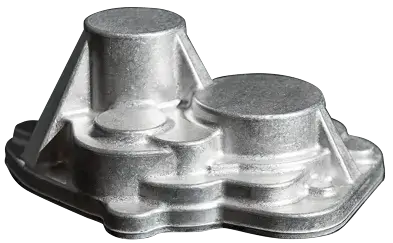
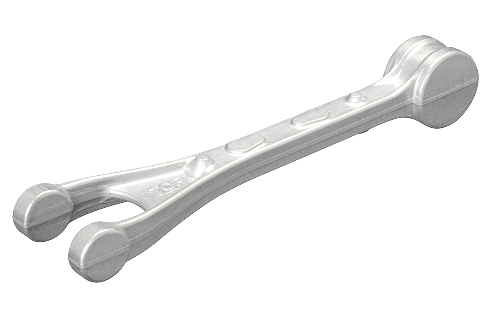
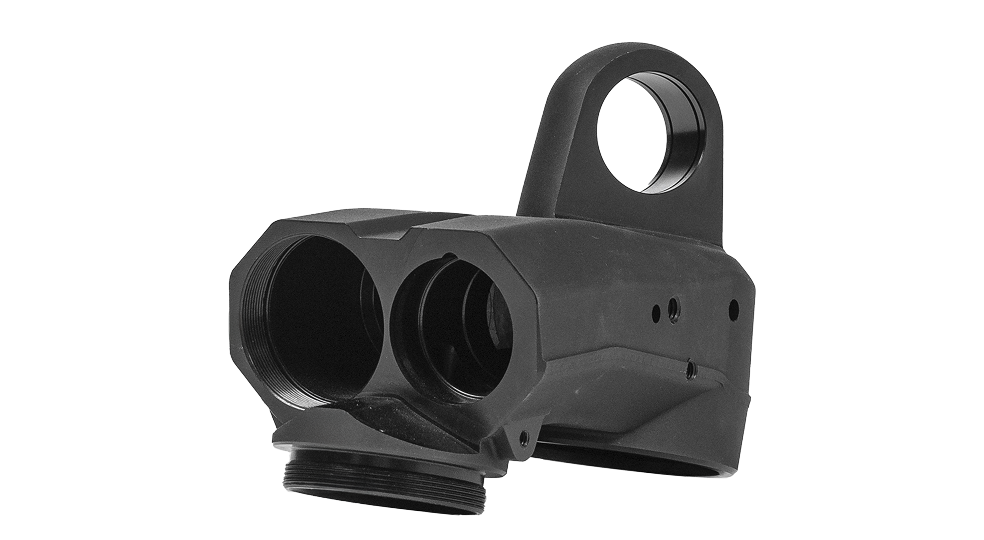
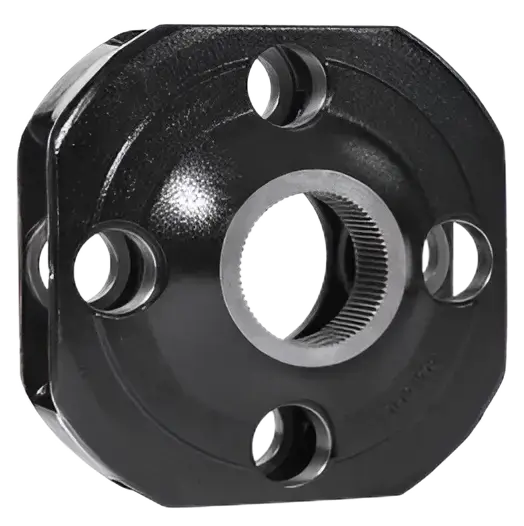
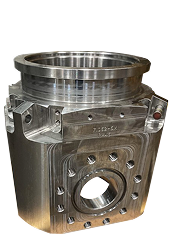
Flexible machining systems are especially valuable when machining forged aluminum components with varying geometries and production volumes. Forging may produce multiple part families that require different finishing strategies.
Anchor Harvey applies flexible machining systems to:
- Machine multiple forged part designs efficiently
- Reduce setup time between production runs
- Maintain consistent dimensional accuracy
- Support scalable production volumes
- Improve overall equipment utilization
This flexibility strengthens both manufacturing efficiency and customer responsiveness.
Industry Applications
Aerospace
Flexible machining systems support aerospace production by enabling efficient machining of multiple complex components while maintaining strict tolerance control.
Specialty Automotive
Specialty automotive manufacturers use flexible systems to accommodate varying component designs and production volumes.
Motorsports
Motorsports applications rely on flexible machining systems to support rapid design changes and short production cycles.
Heavy Equipment, Construction, and Agriculture
Flexible machining systems allow efficient production of diverse component families used in heavy-duty machinery.
Fluid Power
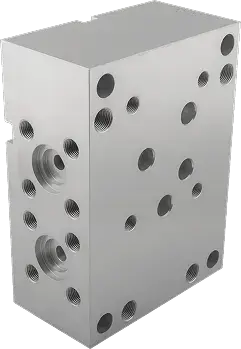
Fluid power manufacturers use flexible systems to machine multiple valve body and manifold designs with consistent accuracy.
Energy
Energy sector applications benefit from flexible machining systems that adapt to varying component geometries and performance requirements.
Why Flexible Machining Systems Matter
- Reduce changeover time between parts
- Improve manufacturing adaptability and scalability
- Increase equipment utilization
- Maintain consistent quality across part families
- Support efficient production planning
No Matter the Industry,
We Flex to Solve What You Need
No Matter
the Industry,
We Are Part of
Everything You do.