
What Is Precision CNC Machining?
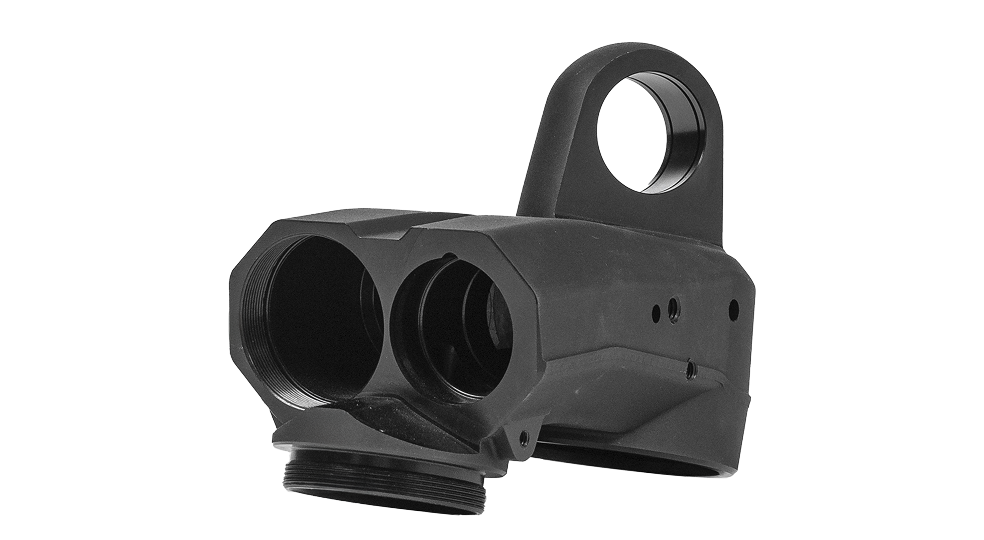
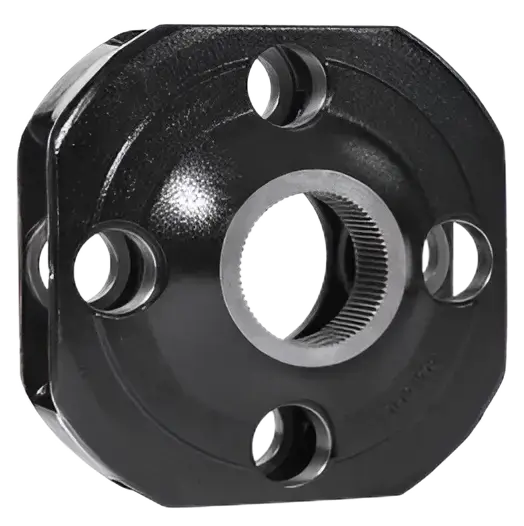
Precision CNC machining is a manufacturing process that uses computer-controlled machine tools to produce components with extremely tight tolerances, high dimensional accuracy, and consistent repeatability. The process builds on standard CNC machining by applying stricter controls, advanced tooling strategies, and enhanced inspection methods to achieve superior precision.
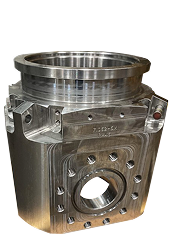
Precision CNC machining is essential for parts that require exact geometry, controlled surface finishes, and reliable performance in demanding applications. It is commonly used for aluminum, steel, stainless steel, titanium, and specialty alloy components across critical industries.
In high-performance manufacturing environments, precision CNC machining serves as a refinement stage within the broader component lifecycle, translating upstream structural properties into the exact functional geometry, surface conditions, and interface features that final assembly and service performance demand.
How Precision CNC Machining Works
Precision CNC machining follows a tightly controlled workflow:
- High-resolution CAD models define exact part geometry and tolerances.
- CAM software generates optimized tool paths with controlled cutting parameters.
- CNC machines execute multi-step machining sequences with strict positional accuracy.
- Advanced tooling and fixturing minimize vibration and deflection.
- Parts are inspected using precision measurement equipment to verify compliance.
This process allows manufacturers to repeatedly achieve tolerances that would be difficult or impossible with conventional machining methods.
Key Elements of Precision CNC Machining
- High-accuracy CNC machining centers
- Advanced cutting tool selection and tool path optimization
- Rigid workholding and fixturing systems
- Controlled spindle speeds and feed rates
- Thermal and vibration management
- Precision inspection and measurement systems
Precision CNC Machining Within the Manufacturing Lifecycle
In an end-to-end manufacturing model, precision CNC machining is most effective when it operates as part of a coordinated lifecycle rather than as a standalone operation. The tight tolerances precision machining is designed to achieve depend heavily on what happens before the part reaches the machine. Material selection, forming method, and incoming geometry consistency all establish the conditions that precision machining either builds on or has to work against.
When upstream processes deliver stable, well-characterized components, precision machining can focus entirely on refining geometry, achieving sealing-critical surface conditions, and holding the dimensional consistency required for functional interfaces. When upstream variation is high, even the most advanced machining equipment cannot fully compensate.
Tolerance stack-up is a direct consequence of treating precision machining as an isolated stage. When the forming process and the machining process are not aligned on datum references and tolerance assumptions from the beginning of the lifecycle, parts can pass inspection at each individual stage while still failing to assemble or perform correctly. Managing stack-up requires visibility across the full lifecycle, not just within the machining operation itself.
Precision machining also plays a critical role in prototype-to-production continuity. When it is integrated into a lifecycle-owned manufacturing model, the fixturing strategies, tool paths, and process parameters established during prototyping carry forward into production in a controlled and documented way. This reduces dimensional variation between development builds and volume production runs.
Continuous dimensional inspection throughout the precision machining process, rather than only at final check, is essential to lifecycle-owned manufacturing. Catching out-of-tolerance conditions before additional processing cost is added protects both quality and schedule.
Industry Applications
Aerospace
Precision CNC machining produces aluminum components used in structural assemblies, housings, and mechanical systems where tight tolerances and surface integrity are required for flight safety and regulatory compliance.
Specialty Automotive
Specialty automotive manufacturers rely on precision CNC machining for lightweight, high-accuracy components used in performance suspension, braking, and drivetrain systems.
Motorsports
Motorsports applications demand precision CNC machining to achieve exact part geometry, reduced mass, and repeatable performance under extreme operating conditions.
Heavy Equipment, Construction, and Agriculture
Precision CNC machining ensures accurate alignment and long term durability for components used in heavy-duty equipment and agricultural machinery.
Fluid Power
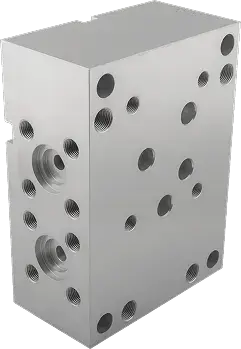
Fluid power systems depend on precision CNC machining to produce valve bodies, manifolds, and connectors that require exact tolerances for pressure control and leak prevention.
Energy
Energy sector components rely on precision CNC machining to maintain dimensional accuracy, material integrity, and operational reliability in oil, gas, and power generation environments.
Why Precision CNC Machining Matters
- Enables extremely tight tolerances and repeatable accuracy
- Improves part fit, function, and performance
- Supports complex geometries and critical assemblies
- Reduces rework and dimensional variation
- Ensures consistent quality across the full component lifecycle when aligned with upstream forming and downstream verification stages
No Matter the Industry,
We Flex to Solve What You Need
No Matter
the Industry,
We Are Part of
Everything You do.