


Reducing Complexity in Data Center Component Manufacturing

The Hidden Challenge Behind Data Center Growth
The race to build data center capacity has never been more intense. "The data center sector is projected to increase by 97 GW between 2025 and 2030, effectively doubling in size over a five-year period." According to JLL, global data center capacity could reach approximately 200 GW by 2030.
Driven by AI workloads, cloud adoption, and growing digital infrastructure demands, OEMs supporting the data center industry are under pressure to design, manufacture, and deliver increasingly sophisticated systems on increasingly aggressive schedules. Due to this growth, industry analysts report, "The rapid expansion of the data center industry has pushed the relevant supply chains to their limits."
Much of the conversation centers around power generation, liquid cooling, energy efficiency, and infrastructure investment. Yet behind every backup generator, chiller, pump assembly, and fire suppression system is another challenge that receives far less attention: manufacturing complexity.
As data center systems evolve, so do the supply chains required to build them. Components become more specialized. Tolerances become tighter. Timelines become shorter. Expectations for performance and reliability continue to rise.
For engineering, procurement, and supply chain teams, the challenge is no longer simply producing a component that meets your specification. It is doing so while managing risk across an increasingly interconnected manufacturing ecosystem.
What many organizations are discovering is that complexity itself has become a source of risk.
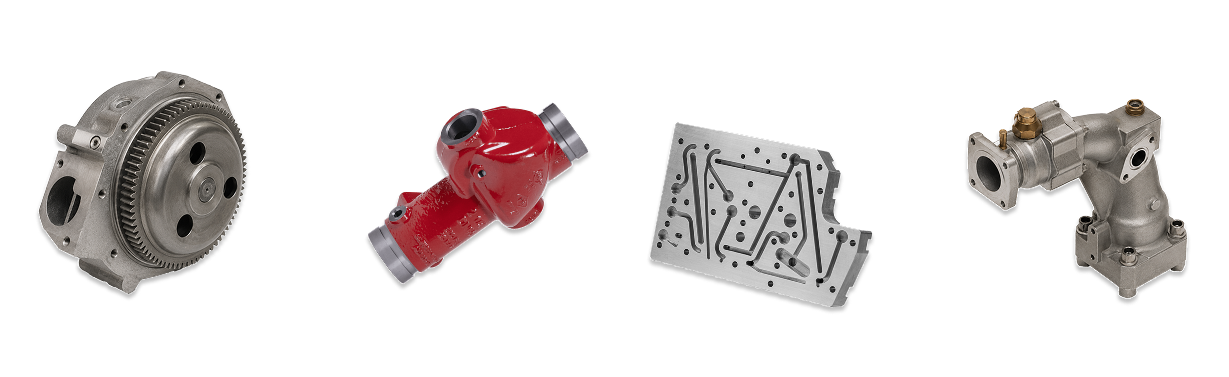
Why Manufacturing Complexity Is Becoming a Competitive Risk
Data Center Systems Are More Integrated Than Ever
A modern data center is a collection of highly interdependent systems. Backup generators support uninterrupted power. Chillers and liquid cooling systems manage thermal loads. Pumps, compressors, valves, and fire suppression equipment work continuously behind the scenes to maintain operational stability.
Each system relies on precision-engineered components capable of performing under demanding conditions:
- Continuous operation
- Thermal cycling
- Pressure fluctuations
- Vibration
- Tight performance requirements
Failure rarely occurs because a system was designed incorrectly. More often, performance issues emerge from a chain of small problems that accumulate across design, manufacturing, assembly, and operation.
As systems become more integrated, the margin for error shrinks.
Complexity Often Hides Between Suppliers
Industry analysts note that data center supply chains are "highly fragmented," with projects often requiring coordination across dozens of suppliers, contractors, and specialized equipment manufacturers. As systems become more sophisticated, managing those interdependencies has become a competitive challenge of its own. Many manufacturing programs involve multiple suppliers responsible for different stages of production:
- Raw material sourcing
- Forging or casting
- Machining
- Finishing
- Testing
- Assembly
Individually, each supplier may perform exceptionally well. The challenge arises at the points where responsibility transfers from one organization to another.
A dimensional issue identified during machining may originate in an upstream process. A schedule delay may ripple through multiple suppliers. A design revision may require coordination across several production partners. These transition points are often where complexity becomes visible.
The more handoffs required to complete a component, the more opportunities exist for delays, communication gaps, quality escapes, and schedule uncertainty.
For many OEMs, managing manufacturing complexity has become just as important as managing manufacturing itself.

Component Performance Starts Long Before Installation
Data Center System Reliability Starts at the Component Level
Data centers operate continuously. Downtime is expensive. Failure is unacceptable.
As facilities become larger and more critical, OEMs are placing greater emphasis on reliability throughout the entire system lifecycle. That reliability often begins at the component level.
Power generation, cooling, and fluid handling systems rely on components that must deliver consistent performance over years of operation.
Manufacturing characteristics such as concentricity, surface finish, material consistency, and dimensional repeatability may appear minor in isolation. Yet these variables can directly influence assembly consistency, equipment performance, maintenance requirements, and long-term durability.
In mission-critical infrastructure, small manufacturing details often have outsized consequences.
Thermal Performance Is Influenced by Manufacturing Decisions
Data centers are, at their core, heat management facilities.
While significant attention is placed on cooling system design, thermal performance is also shaped by manufacturing decisions.
Material properties, wall thickness control, internal geometries, and dimensional stability all contribute to how effectively components transfer, contain, or dissipate heat.
As liquid cooling technologies continue to evolve and thermal loads increase, manufacturing teams play an increasingly important role in helping engineers translate thermal requirements into repeatable production outcomes.
The most successful programs often emerge when engineering and manufacturing teams work together to optimize performance from the earliest stages of development.
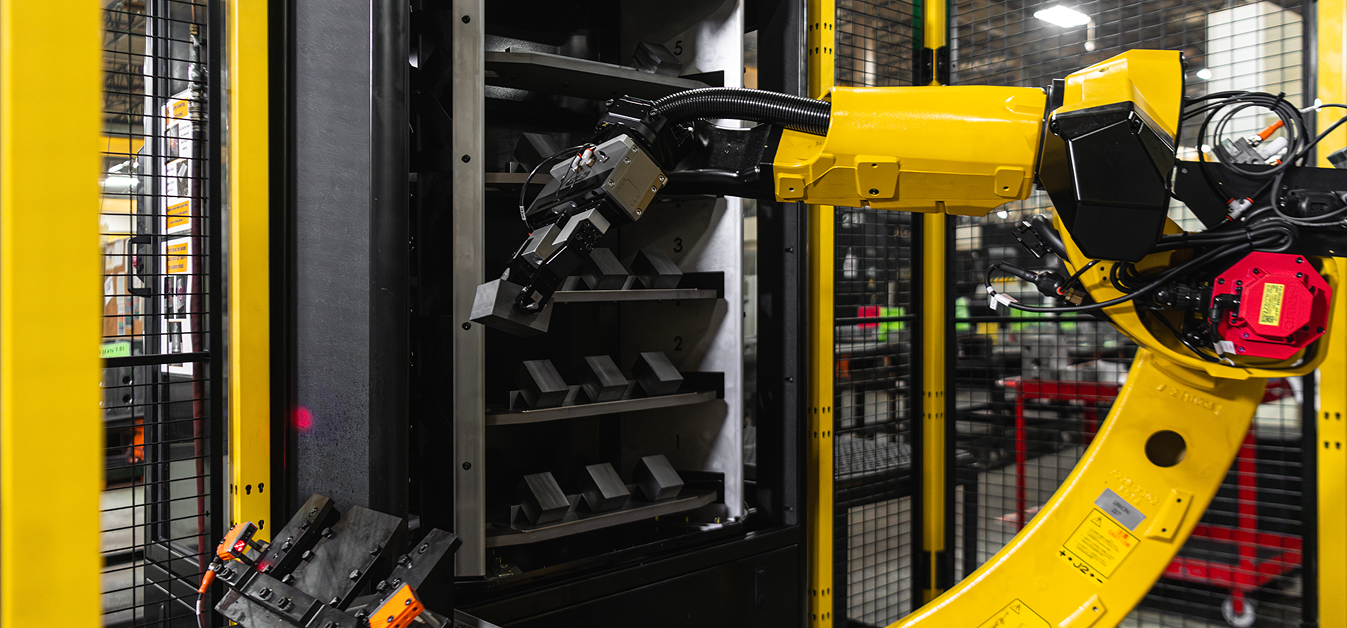
Reducing Risk Before Production Begins
Many Production Challenges Begin During Design
By the time production starts, many manufacturing outcomes have already been determined.
Material selection, tolerances, geometries, and process assumptions all influence how efficiently a component can be produced and how reliably it will perform.
This is why many leading OEMs are shifting manufacturing conversations earlier in the development cycle.
Rather than treating manufacturing as a downstream activity, they are involving production expertise during design reviews, prototype development, and process planning.
This approach often uncovers opportunities to:
- Improve manufacturability
- Simplify production workflows
- Reduce lead times
- Eliminate unnecessary cost
- Minimize future engineering revisions
The earlier potential challenges are identified, the easier they are to solve.
Resilience Is Becoming a Design Requirement
Over the last several years, supply chain disruptions have fundamentally changed how manufacturers think about risk.
Historically, component evaluation focused primarily on cost, quality, and performance. Today, supply chain resilience has become equally important.
Questions that once belonged exclusively to procurement teams now influence engineering decisions as well:
- How many suppliers are involved?
- How dependent are we on overseas sources?
- Where are our bottlenecks?
- How quickly can we scale production?
- What happens if a key supplier experiences disruption?
In many cases, simplifying the manufacturing strategy can reduce risk more effectively than attempting to manage additional complexity.
Key Questions OEMs Should Ask to Reduce Manufacturing Complexity
As organizations evaluate suppliers and manufacturing strategies, several questions can help identify hidden sources of complexity:
- How many production handoffs are required before the component is complete?
- Where does quality ownership begin and end?
- How early can manufacturing expertise contribute to engineering decisions?
- What supply chain risks exist beyond the component itself?
- How will the manufacturing strategy support long-term scalability and reliability?
These questions often reveal opportunities to simplify processes, improve accountability, and reduce risk before challenges impact production schedules or product performance.

Looking Ahead: Simplicity as a Competitive Advantage
The demand for data center infrastructure shows no signs of slowing.
As OEMs work to support that growth, the organizations that succeed will not simply be those with the most advanced technologies. They will be the organizations capable of delivering those technologies reliably, repeatedly, and at scale.
Reducing manufacturing complexity is not about eliminating sophistication. It is about removing unnecessary friction from the process of bringing sophisticated products to market.
For engineering, procurement, and supply chain leaders, simplicity is increasingly becoming a competitive advantage.
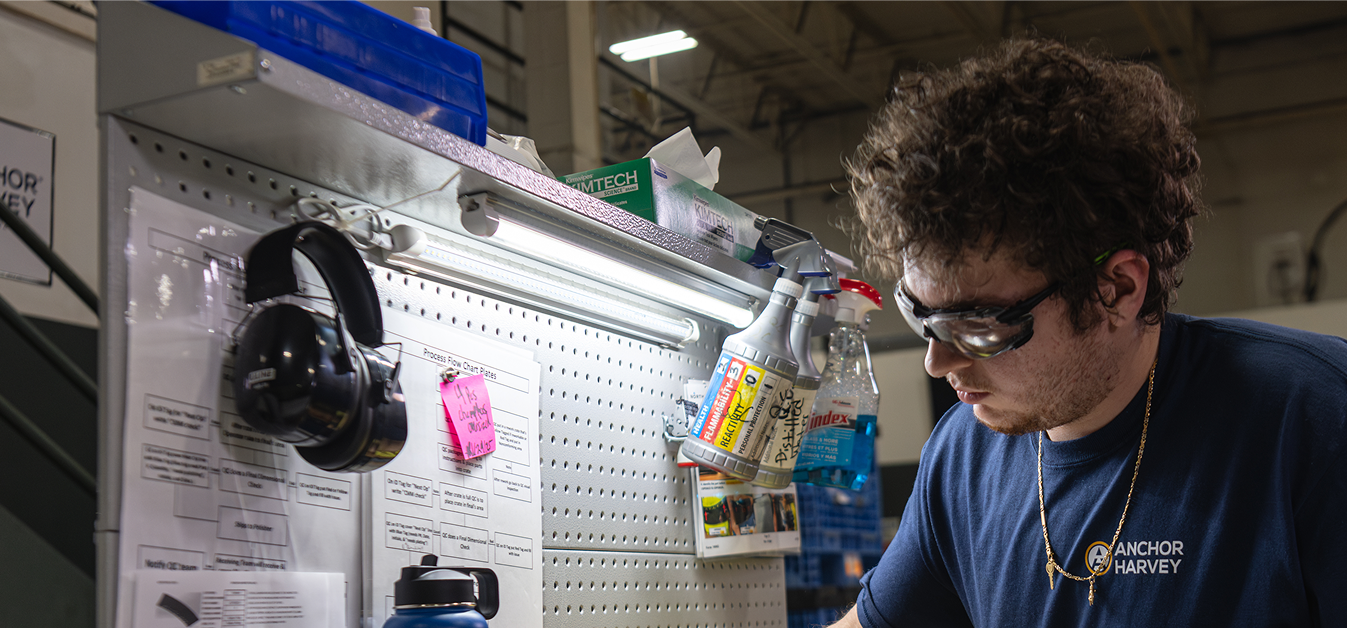
How Anchor Harvey Helps Reduce Manufacturing Complexity
Many of the strategies discussed throughout this article center on a common theme: reducing handoffs, improving coordination, and creating greater accountability throughout the manufacturing lifecycle.
The Anchor Harvey End-to-End Solution™ supports these objectives by integrating engineering, sourcing, forging, machining, assembly, quality, and supply chain management under a single manufacturing partner.
For OEMs building backup generators, chillers, liquid cooling systems, fire suppression equipment, pumps, and compressor assemblies, this approach helps simplify manufacturing workflows while supporting reliability, thermal performance, and supply chain confidence in mission-critical applications.