


End-to-End Manufacturing Lifecycle for Metal Components

A Practical Guide to Integrated Component Production
In modern metal component manufacturing, it’s common for production to be spread across disconnected vendors. Organizations tend to spread component production for speed or cost savings, but that often comes with risks.
We’ve all heard the stories. Some of us have even lived through it.
When component production is spread across disconnected vendors, manufacturers face persistent challenges, primarily communication breakdowns and a critical loss of accountability across handoffs. In many cases, the sourcing team may believe they are diversifying risk by using multiple specialists, but they are actually compounding it by creating "black boxes" of data between each stage of the process.
Because each vendor optimizes only for their specific operation, quality variability is frequently introduced between stages. One of the most severe consequences of this disconnection is tolerance stack-up, which is often discovered too late in the assembly process to be easily corrected. If the forging house does not understand the specific datum points used by the machining shop, the resulting part may technically meet the forging print but fail to provide enough material for a clean finish on a critical interface.
These fragmented models leave engineering and operations teams with limited visibility into how early decisions affect final performance. These issues are becoming significantly more costly as industrial components grow increasingly complex, dimensional tolerances tighten, and supply chains continue to shrink and consolidate. In a global market where lead times are under constant pressure, the "hidden" time spent resolving disputes between vendors, or waiting for one vendor to admit a mistake, can destroy a product's time-to-market advantage.
But there is a solution to this problem that doesn’t sacrifice quality or speed. It's called end-to-end manufacturing. What is end-to-end manufacturing? It's a system that unites the entire manufacturing lifecycle under one entity. Let’s explore why it’s important to have full ownership over the manufacturing cycle of metal components.
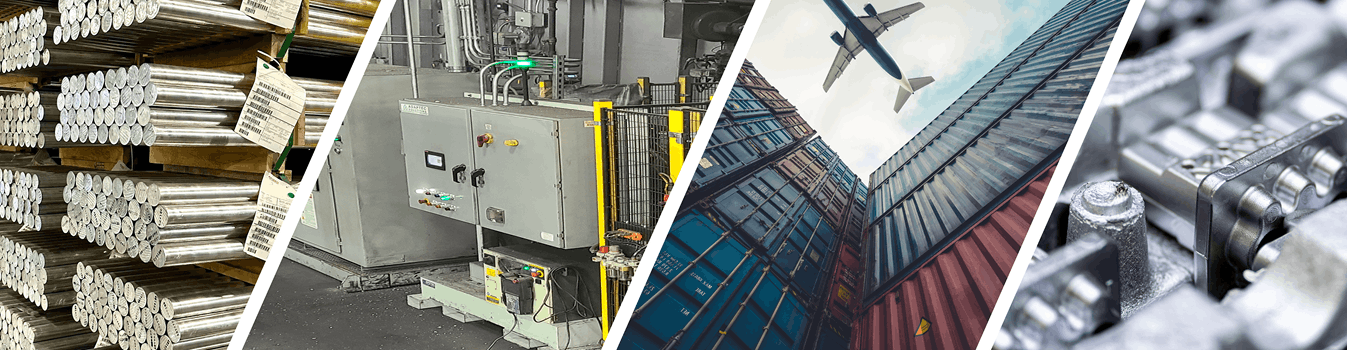
What End-to-End Manufacturing Means at the Component Lifecycle Level
What exactly is end-to-end manufacturing? It’s the practice of lifecycle ownership and coordination. End-to-end manufacturing does not require every process to occur under one roof. It’s about owning and managing the full component lifecycle, whether processes are performed in-house or through qualified partners.
At the component level, end-to-end manufacturing means owning and aligning all major stages of component production within a single, coordinated lifecycle. It represents full manufacturing lifecycle ownership from initial concept to the finished part, moving beyond simply performing multiple operations under one roof.
Unlike vertical integration, which focuses on performing every process internally, end-to-end manufacturing focuses on accountability and coordination across the entire lifecycle, regardless of where each step takes place.
Conceptually, this integrated manufacturing lifecycle flows through several critical stages:
- Early material selection and design decisions
- Primary forming or shaping
- Precision refinement
- Performance enhancement and protection
- Verification, traceability, and delivery
Don’t be mistaken, there are facilities out there that can technically do all processes under one roof. But true end-to-end component production goes beyond the simple contract manufacturing that comes to mind. It's comprehensive engineering, quality assurance, and production alignment across all stages. By contracting multiple parts of the process with a single-source manufacturing partner, the final product carries a greater value.
Lifecycle ownership directly improves dimensional control, dictates material performance, ensures scheduling reliability, and provides necessary cost predictability and manufacturing risk reduction.
Early Lifecycle Decisions That Define Component Performance
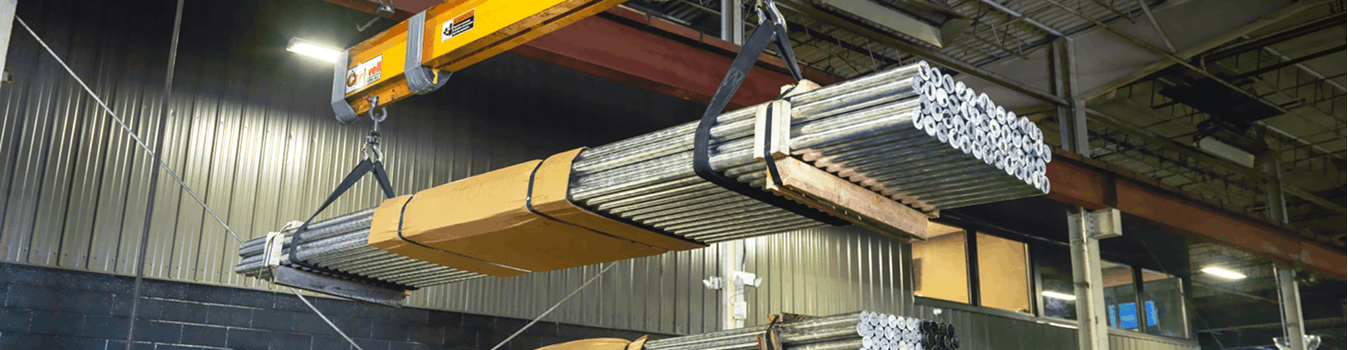
The starting point of a component lifecycle is not tied to a single manufacturing method. Depending on performance requirements, components may begin as forgings, castings, billet, or other material forms. End-to-end manufacturing ensures that whichever process is selected is aligned with downstream requirements from the beginning.
Performance outcomes are frequently determined before precision machining even begins. This is especially true in forged and machine component production. The choices made at the start of the lifecycle (material selection, forming method, near-net shape strategy) establish a performance ceiling that no amount of downstream refinement can overcome.
Understanding this early-stage leverage is central to overall quality and lifecycle thinking.
Material Behavior and Structural Integrity
Early manufacturing decisions, including material selection and production method, directly influence internal structural behavior and material integrity. Components subjected to high stress rely heavily on optimized grain flow.
In forging, the application of heat and mechanical pressure refines grain structure and aligns grain flow with the geometric contours of the part. When grain flow follows the load path of the finished component, rather than being interrupted, as it is when a component is machined from bar stock, fatigue resistance and tensile strength are substantially improved.
Certain forming methods align this internal material structure with expected load paths, significantly improving load distribution, fatigue resistance, and overall structural integrity.
Near-Net-Shape and Downstream Efficiency
The initial shaping phase directly impacts downstream efficiency. Achieving a near-net-shape early in the lifecycle drastically affects subsequent machining efficiency by minimizing the amount of material that must be removed. This proactive approach reduces scrap rates and ensures strict structural consistency throughout the component.
When incoming blank variation is high, marginal parts that might have been salvageable become scrap once machining reveals the extent of the deviation. Catching that variation before additional processing cost is added requires cross-stage visibility that only exists in a lifecycle-owned model.
The ability to achieve near-net shape varies depending on the selected manufacturing process, but the principle remains the same: early alignment reduces downstream inefficiencies regardless of how the component is produced.
Common Lifecycle Starting Points by Application
The manufacturing method selected at the start of the lifecycle varies by application and performance requirements. Different industrial applications require distinct lifecycle starting points driven entirely by performance demands.
Examples include:
- Aerospace: Components operate under extreme stress-to-weight requirements with zero tolerance for structural failure. Manufacturing methods that establish controlled material properties and verifiable performance characteristics are the expected starting point. Lifecycle documentation must be complete and defensible in aerospace applications.
- Specialty Automotive and Motorsports: Performance envelope and weight targets are pushed to their limits. The lifecycle starting point must support rapid iteration without sacrificing the structural integrity that transportation components require.
- Energy: Components must maintain dimensional integrity and leak-free performance. The forming stage must produce a consistent internal geometry and surface condition that precision machining can reliably refine to sealing-critical tolerances.
- Heavy Equipment: The lifecycle starting point must prioritize fatigue resistance, surface hardness, and structural consistency, properties that are established in forming and cannot be recovered downstream if they are not built in from the start. This is all especially true within different industries in which parts are facing a harsh environment, such as agricultural machinery components. These properties must be built into the component early, regardless of whether the part is forged, cast, or machined from solid material.
Precision Refinement Within the Manufacturing Lifecycle
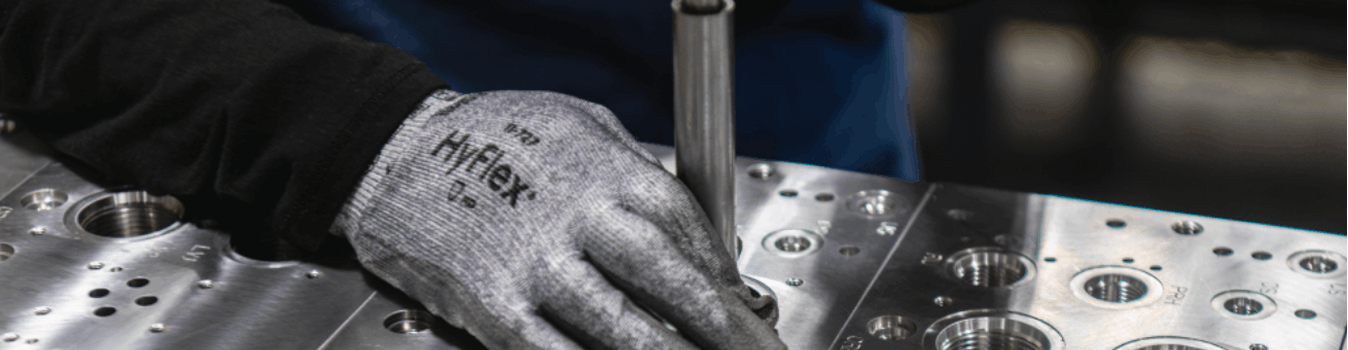
Within an integrated lifecycle, precision refinement processes, which may include machining or other finishing methods, serve as a highly controlled stage, not the origin point of a component’s underlying quality. Depending on the application, this refinement stage may involve machining, casting adjustments, or other finishing processes aligned to the chosen manufacturing method.
Translating Structural Strength Into Functional Geometry
Precision machining translates raw structural strength into functional geometry. It is responsible for establishing tight tolerances, creating functional interfaces, and ensuring seamless assembly compatibility with mating parts. Dimensional accuracy and specific surface conditions for sealing are achieved during this phase. Dimensional inspection has to be a constant action throughout the process.
Precision machining amplifies the investment made upstream rather than fighting against it. It preserves structural strength rather than compromising it with aggressive stock removal or datum strategies that introduce their own variation.
Managing Variation and Repeatability Over Time
Repeatability is maintained over time only when upstream forming and downstream finishing stages are perfectly aligned.
A stable, well-characterized forming process feeds into a machining stage optimized for throughput and consistency.
Early lifecycle decisions enable machining success. Machining cannot "fix" upstream misalignment or poor material structures.
Scaling Without Losing Control
Volume amplifies whatever is already present in a production system. A well-controlled process scales predictably.
In a fragmented manufacturing model, scaling typically means adding capacity at individual stages. This could lead to trouble, as no single entity has the visibility or authority to address problems at the source.
Lifecycle ownership provides the oversight required to keep outcomes consistent as volume grows. Scaling becomes an exercise in replicating a proven, aligned system rather than stress-testing a fragmented one.
Performance Optimization Beyond Geometry
These performance stages apply regardless of the initial manufacturing method and must be aligned with earlier lifecycle decisions.
Many component failures occur during the stages that follow geometric completion. Performance conditioning, surface treatment, and verification determine whether that geometry survives its intended service environment.
Many failures occur after geometry is complete because post-machining stages are treated as supplementary rather than integral. In a lifecycle-owned model, these stages are planned from the beginning and executed with full knowledge of what preceded them.
Performance Conditioning and Durability
Performance conditioning, such as heat treatment, profoundly influences mechanical properties.
Hardness is the most commonly specified heat treatment outcome. Fragmented manufacturers often struggle to achieve a target hardness value at the surface or core.
Fatigue resistance is influenced by both the bulk microstructure and the residual stress state of the component after treatment.
Wear properties are outcomes of treatment parameters. They must be calibrated to a specific alloy, geometry, and prior processing history. Applied without that context, and you’re almost guaranteed inconsistent results across a production run.
Surface Interaction and Environmental Protection
A component will truly be tested in its environment, especially its surface. Many of the conditions that will determine service life depend on surface integrity.
Corrosion resistance requirements vary by operating environment. The appropriate treatment is selected based on base material, exposure conditions, and acceptable service life. The component’s environment truly plays a factor in the chosen treatment. A treatment that performs well in one environment may accelerate degradation in another.
Coatings add material, and material adds thickness. It’s important to consider dimensional tolerance and coating selection. Pre-coat dimensions must account for the coating stack.
Interfaces must function as designed. Surface texture, dimensional consistency, and coating compatibility all determine whether those interfaces will function under operating loads, temperature variation, and repeated assembly cycles.
Surface finishing is often perceived as the most essential aspect of building components that can withstand their environment.
Verification, Traceability, and Accountability
Inspection is part of the entire system. It’s not just a checkpoint. Verification, traceability, and accountability are continuous activities at each and every stage.
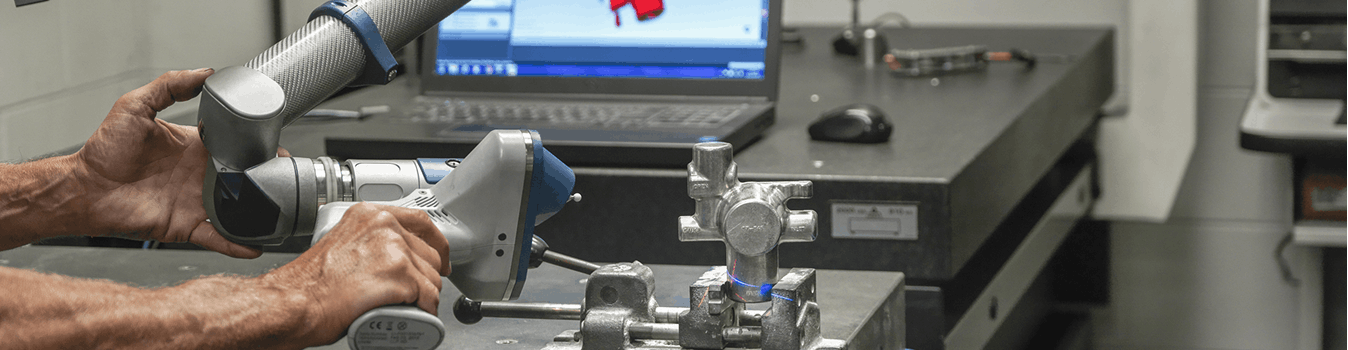
Dimensional verification confirms that the geometry produced at each stage falls within the tolerances required by the next. When verification is a part of the lifecycle, then out-of-tolerance conditions are detected before additional processing cost is added.
Material validation ensures that the state of incoming material matches what the design requires.
Process traceability is the documented thread that connects a finished component to every decision made during its production. It’s often overlooked or left incomplete. It could feel like a chore, but it is essential to finding the root cause of field issues. In an end-to-end manufacturing lifecycle, a single entity completely owns and traces the entire manufacturing process.
Where Manufacturing Risk Actually Comes From: The Hidden Costs of Fragmented Manufacturing Lifecycles
At first glance, fragmented manufacturing might seem like quite the bargain. Cost savings could sound attractive, but it does come with some drawbacks. As the saying goes, “You get what you pay for.”
A fragmented lifecycle means that you’re working with multiple vendors. Between each and every vendor, you’re accumulating risk. Data loss happens between stages because there’s no oversight. Tolerances set at one facility conflict with assumptions made at another. Problem solving is reactive rather than proactive.
With an integrated lifecycle, you’re getting all the benefits that come with single ownership. The process is unified and overseen by the same entity. When problems arise, they’re fixed at the root cause. Outcomes are predictable because every stage is repeatable. There’s less risk involved.

Lifecycle Ownership Across Industrial Applications:
Where End-to-End Manufacturing Delivers the Most Value
The specific manufacturing process may vary by application, but the value of lifecycle ownership remains consistent. Lifecycle ownership delivers value wherever the consequences of manufacturing variability extend beyond the production floor. But there are some industries where end-to-end manufacturing delivers the most value.
In healthcare and medical devices, equipment must meet exact specifications with complete process traceability behind every part. Regulatory frameworks require complete documentation of the entire process.
In consumer goods, customers are expecting the same product every single time they make a repeat purchase.
Components like gears, shafts, and couplings are critical equipment parts in industrial machinery. End-to-end industrial manufacturing decreases the risk of those parts not being precisely made.
In fluid power systems, a leakproof build is essential. A single stage of uncontrolled variation can produce systemic leakage or efficiency loss across an entire production run. Fluid power components could fail to operate with poor planning. Lifecycle alignment unifies the entire process to keep risk at a minimum.

Engineering Collaboration in an Integrated Lifecycle:
Designing With the Full Manufacturing Lifecycle in Mind
Decisions made at the design stage have consequences that extend throughout the entire manufacturing process. Everything is interconnected, and downstream implications are only visible when experts from across the lifecycle are involved from the beginning.
This collaboration ensures that the selected manufacturing method, whether forging, casting, or machining, supports both performance requirements and production efficiency.
Tolerance stack-up is one of the most consistent sources of late-stage manufacturing problems, and one of the most preventable. It originates in how tolerances are assigned across features and stages without accounting for how they interact. Managing stack-up correctly requires simulating how tolerances propagate through the lifecycle before tooling is cut and production begins.
Material selection is another consistent problem in manufacturing. Material selection tradeoffs may have unintended consequences later on. Tradeoffs can happen, but material selection has to be a lifecycle decision rather than a design-stage specification made in isolation. Parts need to have a design for manufacturability.
End-to-end manufacturing is a collaborative engineering model. It’s all hands on deck from step one.
Understanding Total Manufacturing Economics
Cheaper isn’t always better. Organizations frequently fall into the trap of optimizing for the lowest piece-price at individual manufacturing stages. In complex production, the lowest unit price rarely equates to the lowest total manufacturing cost.
True economic predictability requires looking beyond the invoice. There are some hidden costs associated with fragmented manufacturing.
- Setup and tooling alignment: Each vendor establishes their own process setup without shared awareness of the rest of the process. Setup and alignment lead to complex and expensive tooling solutions.
- Scrap and rework risk: Yield loss in a fragmented supply chain is incredibly expensive. Finding replacement materials and expediting shipping shatters production budgets and delivery schedules. Not to mention the legal risks associated with regulated industries.
- Logistics and scheduling complexity: Relying on multiple vendors will inevitably increase lead times. Waiting on moving parts only ties up capital that could be deployed elsewhere.
- Quality escapes: The most severe cost driver in any manufacturing program is a quality escape, or a defective component that makes it into the final assembly or the customer’s hands. Warranty claims, field failures, product recalls, and reputational damage will always eclipse the savings of selecting an unintegrated vendor.
With complete lifecycle ownership, you’re reducing the risk of all these problems. You can fix issues at the root. You can even implement new processes without having to wait on a third party to approve and implement.
Integrated manufacturing explained in terms of costs will often reveal how it’s not a drastic upcharge.
Frequently Asked Questions About End-to-End Manufacturing
Summary: End-to-End Manufacturing Lifecycle Explained
End-to-end manufacturing is not defined by integrating production processes, such as forging or machining, but by the coordination and ownership of the entire component lifecycle.
End-to-end manufacturing is a lifecycle-based production model where component performance, quality, and accountability are managed across all stages, from early material and design decisions through precision refinement, performance optimization, and verification. This integrated approach reduces risk, improves predictability, and aligns manufacturing outcomes with real-world performance.