

The Complete Guide to CNC Machining Services:
Capabilities, Materials & What to Expect from a Contract Machining Partner

Summary
CNC machining services combine computer-controlled precision with engineering expertise to produce tight-tolerance metal parts across a wide range of materials, sizes, and industries. The right contract machining partner brings far more than a machine shop floor: process knowledge, quality control systems, and engineering depth that determine whether a part comes back right the first time.
Key facts before you evaluate a supplier:
- CNC machining services include milling, turning, boring, grinding, honing, thermal deburring, and pre-assembly operations
- Anchor Harvey's precision CNC machining services can achieve tolerances down to ±0.0001 inch, with part sizes from 0.040 inch to 78 inches in diameter and up to 17,000 pounds
- 5-axis machining enables single-setup production of complex geometry, eliminating repositioning errors and reducing scrap
- Depending on your industry, key certifications to inquire about or consider from any contract machining supplier include ISO 9001, AS9100, FAA 145, and ITAR compliance
- A partner who handles both forging and CNC machining services eliminates the supplier hand-off where lead time problems and quality escapes often occur
CNC machining services are central to nearly every precision manufacturing supply chain. But shops vary enormously in what they can actually do. Axis count, material capability, quality management systems, and engineering depth differ in ways that directly affect program outcomes.
Most sourcing decisions get made on price and lead timelines. That misses the capability and engineering factors that determine whether a part comes back right, at the quoted cost. A cheaper quote with hidden rework or quality escapes is not a savings.
The distinction that matters most is between a transactional machining shop and a contract machining partner. A transactional shop takes your print and runs it. A partner flags design issues before cutting starts, maintains material traceability, and treats delivery accountability as a shared obligation. At the top of that spectrum sits a supplier who handles both forging and CNC machining under one roof, eliminating the hand-off point where most supply chain failures originate.

What CNC Machining Services Actually Include
CNC machining is computer-guided subtractive manufacturing: cutting tools remove material from a workpiece to produce a precise geometry. Unlike additive manufacturing, CNC machining works in production-grade metals with full structural integrity.
What separates a capable shop from a limited one is the breadth of its process catalog. A full-process shop completes a part under one roof, reducing hand-offs and the lead time and quality risk that comes with each one.
Machining Operations
Core CNC machining operations include CNC milling in 3-, 4-, and 5-axis configurations; CNC turning on single and dual-spindle live tool lathes and Swiss lathes; vertical turning centers for large-diameter parts; and boring, honing, Blanchard grinding, and precision grinding for bores and surfaces beyond what milling and turning achieve.
Each hand-off to a secondary supplier extends lead time and introduces another opportunity for tolerance stack-up or damage in transit.
Thermal Deburring
Most shops deburr manually. Thermal deburring uses a controlled combustion process to remove burrs simultaneously from all surfaces, including internal passages that are physically inaccessible by hand. The result is fully repeatable and produces a higher-quality surface condition. For precision components and high-volume machined parts, this is a genuine differentiator.
Flexible Machining Systems and Pre-Assembly
Once a part is fixtured in a flexible machining system, that setup stays resident. On-demand runs from one prototype to 50,000+ pieces can be produced without incurring a full setup penalty each time, which dramatically reduces per-unit cost and lead time for programs with variable demand.
Pre-assembly capabilities at the machining stage compress the supply chain further: bearing and bushing insertion, Helicoil, expander plugs, SAE plugs, welding, and saw cutting can all happen before the part ships.
Engineering Services
A contract machining partner offers 3D solid modeling, reverse engineering, CNC programming and simulation, design for manufacturability review, and cost-avoidance analysis. Design for Manufacturing (DFM) at the quoting stage catches expensive design issues before the first cut. A print-to-part shop runs what you send. A partner tells you when it will cost you.

Materials That Can Be CNC Machined
Material capability varies significantly across shops. A shop equipped to machine aluminum efficiently may lack the tooling or process knowledge to handle titanium, hardened steel, or high-nickel alloys. Confirming material capability before entering a sourcing process saves significant time.
Common and Exotic Materials
Aluminum machines quickly, holds tight tolerances well, and is widely used in aerospace, fluid power, and motorsports.
Cast iron and ductile iron offer high wear resistance for heavy equipment and agricultural components. Austempered ductile iron (ADI) delivers an exceptional strength-to-weight ratio where impact strength and load-bearing performance are both required.
Steel and stainless steel are workhorses across fluid power, food processing, and energy applications, with stainless selected specifically for corrosion resistance.
Inconel and titanium are high-temperature, high-strength exotic alloys used in aerospace and defense. Both carry significantly longer cycle times, higher tool wear, and stricter process controls. Not all shops are equipped, however. Hardened metals require grinding capability and dedicated tooling. Shops that solely specialize in soft-state machining cannot complete them.
Material Traceability and Cost Drivers
Require material certifications and lot tracking from any supplier. Material test reports should accompany every shipment. Over-tolerancing non-critical features in exotic materials is one of the most common hidden cost drivers. When tight tolerances require additional operations on Inconel or titanium, the effect on piece price is exponential.

Tolerances, Part Sizes, and Inspection
Tolerance capability is the primary quality filter buyers use to qualify a machining supplier. Tolerance and surface finish are distinct specifications. Ra and Rz measure surface texture, which is critical for sealing surfaces, bearing fits, and hydraulic components. A part can be dimensionally within tolerance while failing a surface finish requirement.
Tolerance Tiers in Practice
Standard 3-axis CNC machine services typically achieve ±0.002 inch, appropriate for structural parts and housings where ultra-tight fits are not required. Precision 5-axis machining typically achieves ±0.0004 to ±0.0008 inch, required for hydraulic manifolds, bearing bores, and sealing surfaces. Under optimal conditions, tolerances down to ±0.0001 inch are achievable on critical features.
Geometric Dimensioning and Tolerancing (GD&T) then governs how tolerances are applied and interpreted. Tighten tolerances only on features critical to function. Over-tolerancing adds machining time without adding value.
Part Size and Weight Range
Part sizes from 0.040 inch to 78 inches in diameter, and up to 17,000 pounds, require specific equipment, fixturing, and material handling capability. Very few contract machining suppliers are equipped across that full range. The ability to machine both small precision components and large structural parts under one contract is a genuine market differentiator.
Quality Management Systems
Look for CMMs for dimensional verification, Zoller tool setters, Romer Absolute 3D measuring arms for large-part geometry, surface testers and digital profilometers, and non-destructive testing for aerospace and safety-critical components. Climate-controlled quality labs matter because thermal expansion introduces measurement error in uncontrolled environments. PPAP, FAI, and ISIR documentation confirm parts match specifications before full production runs begin. If an issue occurs, corrective action tools such as 8D reports or 5Ws analysis help identify root causes and prevent repeat problems.
5-Axis Machining and Complex Geometry
5-axis machining is widely marketed, but it's less widely understood. Many shops advertise the capability but only perform indexed (3+2) positioning, repositioning the part to a fixed angle and then machining with a 3-axis process. True simultaneous 5-axis moves the cutting tool and workpiece along five axes at once.
Simultaneous 5-axis eliminates repositioning errors and tolerance stack-up from multiple setups. It reduces scrap, shortens lead times, and produces better surface finishes using shorter cutting tools with less deflection. Buyers evaluating a shop for complex geometry should ask directly: is your machining simultaneous or indexed?
When 5-Axis Is the Right Choice
5-axis machining is not optional for turbine blades, impellers, structural aerospace brackets, engine housings, hydraulic manifolds, and parts with deep pockets, undercuts, or compound-curved surfaces.
It's especially valuable for low-volume, high-complexity parts where setup labor costs dominate, such as prototypes, R&D components, and mission-critical parts.
AI-assisted CAM software and program simulation reduce first-article failures by verifying toolpaths before cutting starts. Shops with strong CAM infrastructure catch problems on screen, not on the first part.

Quality Certifications and What They Mean for Your Industry
Certification logos are easy to display, but buyers should request actual certificate downloads and verify current status. A lapsed certification is not a certification. The certifications that matter depend on the buyer's industry.
Certifications and Their Industry Relevance
ISO 9001 confirms consistent, documented quality processes. Required by most industrial buyers as a baseline.
AS9100 is the aviation, space, and defense quality management standard. Required for aerospace and defense supply chains.
FAA Air Agency Certificate (FAA 145) certifies the facility as an FAA-approved repair station. Very few machining shops hold this. Required for aviation repair component buyers, and its presence signals an exceptional level of quality system rigor.
CQI-9 is a heat treat process audit that prevents defects from thermal processing variation. Relevant for automotive and heavy equipment buyers.
ITAR-Compliant registration is required for defense and controlled-technology customers. It is not optional for defense supply chain participation.
How to Evaluate a Contract Machining Supplier
Piece price is not total cost. A machined part that arrives out of tolerance, requires rework, or fails in the field costs multiples of the difference between two quotes. Evaluate across five dimensions: capability and equipment, quality systems, engineering depth, production flexibility, and communication.
1. Capability and Equipment
Ask whether the shop runs true simultaneous 5-axis or only indexed. Confirm they can handle your part's size and weight range. Ask whether flexible machining systems allow repeat orders without full setup penalties, and whether they machine your specific material, including exotic alloys. Ask for maintenance logs: a well-maintained older machine outperforms a neglected newer one.
2. Quality and Certifications
Verify that the supplier's certifications are current. Request downloads. CMMs, surface profilometers, hardness testers, and non-destructive testing should be in-house. PPAP, FAI, and ISIR documentation should be available on request. Material traceability and MTRs should accompany every shipment.
3. Engineering Depth
Does the shop provide DFM feedback at the quoting stage, or are they a print-to-part shop? Do they use CAM simulation to verify programs before cutting? Is their process knowledge documented, or does it live in one machinist's head?
4. Production and Supply Chain Flexibility
Can the shop handle your full volume range, from prototype to high-volume production? Do they offer customized stocking, Kanban, or consignment inventory? Do they have an MRP system with real-time part status, and multiple domestic facilities for supply chain optionality?
5. Communication and Partnership
A single point of contact throughout the program matters more than buyers expect until they experience a shop that does not provide one. RFQ response in 12 to 24 hours is best practice. A partner proactively flags issues. A transactional shop waits for you to find them.
When a Forging and Machining Partner Outperforms a Machining-Only Shop
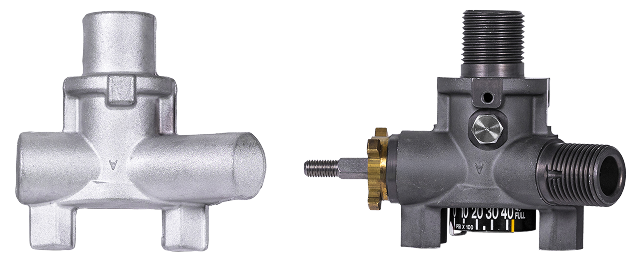
CNC machining services and forging are complementary processes. A supplier who performs both eliminates the hand-off between a forge shop and a machine shop, the point where lead time extensions and quality escapes most often originate. Single-source accountability means one PO, one quality trail, one delivery commitment.
The Structural Case for Forging First
Forging aligns metal grain flow through the part geometry and produces a near-net-shape workpiece with superior strength and fatigue resistance. Machining from bar stock cuts through grain ends, which can reduce fatigue life at transition points.
For load-bearing, fatigue-critical components such as aerospace brackets, heavy equipment hubs, and fluid power bodies, a forged-then-machined part is structurally superior to one machined from billet. This is metallurgical fact, and it matters most under cyclic loading.
Material Efficiency and Cost
Forging achieves approximately 85 to 90 percent material utilization. Machining from raw billet can waste up to 60 percent of raw material. For titanium or Inconel, that waste is a significant program cost driver. An integrated partner forges a near-net shape first, then machines only the features requiring tight dimensional accuracy, reducing material cost directly and measurably.
When to Seek a Combined Partner
The right fit for a combined forging and machining partner includes aerospace structural components, heavy industrial and agricultural parts under cyclic loading, fluid power bodies, and automotive drivetrain components.
Any program where material waste, fatigue performance, or supply chain consolidation is a cost factor benefits from this model.

The Next Step: End-to-End Manufacturing Partnership
End-to-end capability extends beyond forging and machining to include final assembly, customized stocking programs, Kanban, Min/Max, consignment inventory, and international manufacturing partners where total landed cost matters.
What does it actually look like to consolidate forging, machining, and supply chain under one roof? Read the complete guide to end-to-end manufacturing partnerships.
CNC Machining Services at Every Stage
CNC machining services range from basic 3-axis work to full-process partnerships involving exotic materials, tight tolerances, engineering support, and integrated supply chain management. The capability gap between the top and bottom of that range is wide.
The strongest results come from pairing machine capability with engineering depth and human accountability at every stage. Use the five evaluation dimensions above to assess where your current supplier falls short, and what kind of partner your program actually requires.
Talk to Anchor Harvey about CNC machining services that combine precision, engineering depth, and end-to-end manufacturing capability, from forging through finished, inspected delivery. Request a quote today.